APPS • DAILYTECH.ID - While Google Docs lacks a direct “Insert Text Box” button like traditional word processors, you can effectively create one using the Drawing tool. Navigate to Insert > Drawing > New, then select the Text Box icon (T) to draw and place your box. Once created, you can customize the border, fill color, and positioning to ensure it floats or aligns appropriately within your document.
Google Docs uses a different approach than applications like Microsoft Word for adding specialized graphical elements such as movable text boxes, relying heavily on the native Drawing tool functionality. This powerful Drawing feature allows for extensive customization, making the resulting text box versatile for structuring and highlighting important information, serving as callouts, side notes, or complex layout elements within your professional or academic document.
How to Add a Text Box Using the Google Docs Drawing Tool
For users seeking to incorporate a floating text box or any structurally independent text element, the integrated Drawing tool provides the most reliable and versatile solution. This method creates a self-contained visual object that behaves consistently across devices and platforms, bypassing the common confusion associated with the lack of a simple “Insert Text Box” button.
Step-by-Step: Inserting the Text Box Structure
Before beginning, ensure you are working on the desktop version of Google Docs, as the full functionality of the Drawing tool is not consistently available on mobile applications.
- Access the Drawing Feature: Open your Google Doc and position your cursor roughly where you intend the text box to be referenced within the document’s flow. Go to the top navigation menu, click Insert, hover over Drawing, and then select the New option from the cascading menu. This action launches the dedicated Drawing canvas interface.
- Select the Text Box Tool: Once the Drawing canvas appears (a separate window overlaying your document), locate the Text Box icon in the toolbar near the top. This icon is typically represented by a capital letter T encased within a square or rectangular shape. Click this icon to activate the tool.
- Draw and Position the Box: Your cursor will transform into a crosshair. Click and drag your mouse across the drawing canvas to define the size and initial aspect ratio of your text box. It is advisable to draw it slightly larger than needed initially, as resizing and final styling can be done inside the canvas before insertion.
- Enter and Format Content: Click inside the newly drawn box. You can now type your desired text. Utilize the standard formatting options in the Drawing toolbar—font selection, size, bolding, italics, and alignment (left, center, right)—to style the text. Note that these formatting choices are independent of the styles applied to the rest of your core document text.
- Save and Close: Once your content is entered and any necessary internal text formatting is complete, click the prominently located blue Save and Close button in the top right corner of the Drawing window. The text box, now treated as a single graphical object, will instantly appear in your Google Doc at the cursor’s original insertion point.
Customizing Appearance: Borders, Colors, and Positioning
After the text box is inserted into your main document, it retains its editability. A crucial advantage of the Drawing tool method is the extensive level of visual customization available, allowing you to create features such as a colored text box or a clearly defined border (how to add a box around text in google docs).
Editing and Styling the Box
If you need to adjust the text, colors, or border appearance after insertion, you must re-enter the Drawing canvas:
- Reopening the Editor: Double-click the inserted text box object within your Google Doc. This action reopens the original Drawing canvas, allowing full access to all styling tools.
- Adding a Border (Line Styling): With the text box selected inside the Drawing canvas, use the border options in the toolbar:
- Line Color: Select the pencil icon to choose a color for the box outline.
- Line Weight: Use the icon represented by lines of varying thickness to select the border size (e.g., 2px, 4px). A weight of 3px or 4px is usually sufficient to make the box stand out clearly from the page background. This step directly addresses how to add a box around text in google docs.
- Line Dash: If you require a dashed or dotted border, use the line style options (a broken line icon) to select the desired pattern.
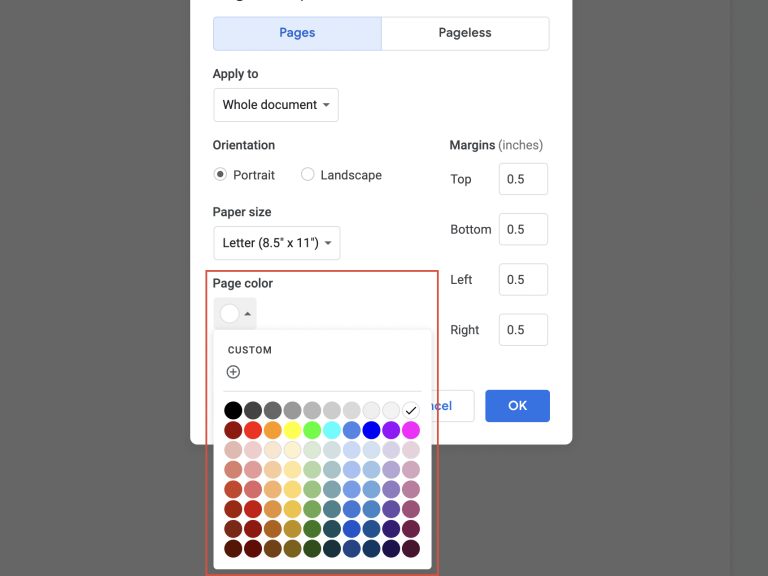
- Adding Fill Color (Background): To create a colored text box or a visually appealing callout, select the box and use the Fill Color icon (the paint bucket). Choose a solid color or a gradient. Selecting a light hue (like a pale yellow or cyan) often provides sufficient contrast without making the text illegible. This turns the text box into an attractive, high-visibility element.
Positioning and Text Wrapping Controls
Once the visual styling is complete and you have clicked “Save and Close,” the final step is defining how the text box interacts with the surrounding document content. This is essential for creating a truly floating text box or a movable text box.
Click the text box once in the Doc. Below the inserted object, three primary positioning options will appear:
- In line (Default): The text box is treated like a large character. It sits in a fixed position on the line of text where it was inserted, moving only as surrounding text shifts. This is the least flexible option for layout.
- Wrap Text: This is the most common selection for callouts. The surrounding text flows cleanly around the rectangular edges of the text box. This allows you to drag and drop the box anywhere on the page, and the document text will automatically reflow to accommodate its new position, making it a highly movable text box.
- Break Text: The text box is placed on its own line, forcing surrounding paragraphs to start above and resume below the box, leaving clear white space on either side.
- Behind Text/In Front of Text: These options are ideal for watermarks or overlay elements. Choosing Behind Text allows the core document text to flow directly over the text box, effectively creating a background image or colored element.
Choosing either Wrap Text or Break Text is the necessary step for making the object freely movable and easily repositioned across your document pages.
Alternative Methods and Advanced Text Box Applications
While the Drawing tool is the definitive answer to how to add a text box in google docs, users often have specific needs related to mobile access, form creation, or managing multiple instances.
Creating Text Boxes on Google Docs Mobile (Android/iOS)
A frequent challenge for users is how to add a text box in google docs mobile. Unfortunately, the full-featured Drawing canvas is not currently accessible via the standard Google Docs Android or iOS apps.
- Mobile Limitation: The inability to initiate the Insert > Drawing > New process directly on mobile means you cannot create a new, complex text box structure from scratch using the app.
- Mobile Workaround (Viewing and Basic Editing): The best practice for professionals and students who rely on mobile is to use the desktop application to insert and fully customize the text box first. Once inserted, the text box remains visible and functions as an integrated object when viewed on the mobile app (how to add a text box in google docs ipad / how to add text box in google docs android). Crucially, you can typically still tap and edit the text within the box using the mobile interface, but major resizing, repositioning, or changing border styles often requires returning to the desktop interface for the full functionality.
How to Create Fillable and Multiple Text Boxes
The desire for a fillable text box or an editable text box usually stems from a need to create structured areas for collaboration or data input.
- Creating Visually Fillable Areas: If “fillable” simply means a box that is clearly defined and ready for user input (upon sharing the document), then the styling achieved through the Drawing tool is sufficient. By applying a heavy border, a background color, and specific placeholder text (e.g., “Enter Key Takeaways Here”), you create a visually distinct area for text entry.
- True Form Fields: If the requirement is for a structured input field (like a checkbox, dropdown menu, or secure text input) that captures data outside of the document itself, Google Docs does not natively support this functionality. In this case, you must create the form fields using a dedicated tool, such as Google Forms, and then link or embed the resulting data or summary into your Doc.
- Adding Multiple Text Boxes: To add another text box in google docs (or multiple, distinct elements), you can repeat the original process: Insert > Drawing > New for each separate box required.
- Efficiency Tip (Duplication): A much faster method, once you have styled your first box perfectly, is to simply use keyboard shortcuts to duplicate the entire object. Click the existing text box once in the document to select it, copy it using Ctrl+C (Windows) or Cmd+C (Mac), and then paste it immediately using Ctrl+V or Cmd+V. The duplicate object will appear, retaining all the custom styling (border, fill color, text wrapping settings), allowing you only to worry about repositioning and editing the internal text.
Understanding Why Docs Uses the Drawing Tool as the Structural Foundation
Users migrating from desktop-centric word processors often ask can you add a textbox on google docs and express confusion when they do not find a simple button on the Insert menu, specifically inquiring how to insert text box in google docs without drawing. The answer lies in the fundamental architecture of Google Docs.
Google Docs is inherently an HTML/web editor. The primary text flow is designed to be linear and responsive, much like a web page. Unlike programs such as Microsoft Word, which utilize complex internal document markup languages to anchor objects relative to the page margin or text flow, Docs requires complex graphical elements like movable text boxes to be treated as separate, embedded objects.
The Drawing tool serves as the necessary structural “wrapper.” When you create a text box, the Drawing tool packages the text, the borders, and the fill color into a single, cohesive image object (or vector object). This object can then be cleanly placed within the document’s HTML structure. Without this wrapper, the text box would struggle to maintain its fixed shape, position, and styling when viewed across different browsers or device sizes.
Therefore, the query how to insert text box in google docs without drawing is currently impossible, as the Drawing tool provides the essential structural foundation required to create a movable, stylized, floating object that respects the surrounding document layout. This approach ensures maximum compatibility and stable layout integrity, even when collaborating or viewing the document on mobile devices. Mastering the Drawing tool is the key to unlocking advanced layout and structuring capabilities within Google Docs.
FAQs – How To Add A Text Box In Google Docs
To make the text box float, click on the inserted box once to select it. Below the object, choose the Wrap Text option that appears. This setting treats the box as an independent object, allowing you to drag and drop it anywhere on the page without distorting the surrounding paragraphs of document text.
Yes, you can fully control the text styling. Double-click the box to re-open the Drawing editor. Use the standard formatting options in the Drawing toolbar (font type, size, bolding, etc.) to modify the text style before clicking “Save and Close” to apply the changes to your document.
There is no single keyboard shortcut to directly insert a text box because the process inherently requires initiating the Drawing tool first. The most efficient method remains navigating quickly through the menu: Insert > Drawing > New and then selecting the dedicated Text Box icon (T) inside the drawing canvas.
The primary alternative method to put a box around existing text is by utilizing a single-cell table. Go to Insert > Table and select a 1×1 cell structure. Paste your text inside the cell, and then modify the border thickness and color of that cell to simulate a simple, non-floating boxed effect around the content.
The text box is inserted as a static image object on most mobile devices due to app limitations. While you can typically edit the text inside the box, complex actions like resizing, changing border colors, or adjusting the text wrap setting must usually be performed using the full feature set available on the Google Docs desktop interface.