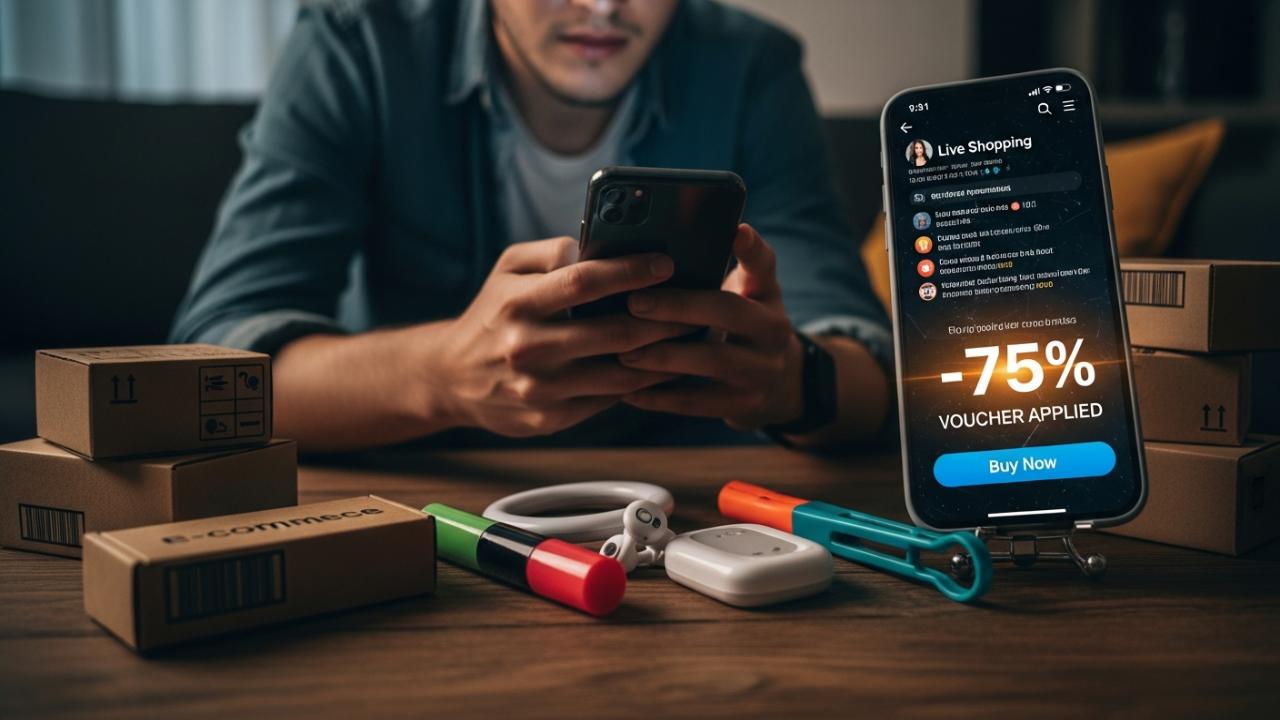
TIKTOK • DAILYTECH.ID - TikTok Shop items are significantly cheaper primarily due to aggressive platform subsidies and steep new-user discounts designed to capture market share rapidly. This strategy is complemented by low seller commission rates compared to legacy platforms like Amazon, direct sourcing models (D2C), and the leveraging of commission-based creator affiliate marketing via Live Shopping.
This platform has rapidly disrupted the e-commerce landscape, becoming notorious for prices that often seem too good to be true, leading consumers and competitors alike to question the underlying business mechanics. Understanding these pricing dynamics requires a deep dive into TikTok’s market penetration goals and operational strategies as they attempt to fundamentally change how people shop online.
Understanding the TikTok Shop Business Model
The intense interest surrounding the platform’s pricing—often encapsulated by the query, why is tiktok shop so cheap—is not accidental; it is the direct result of a highly calculated strategy to penetrate a crowded e-commerce sector dominated by well-established players. To truly grasp the deep discounts available, one must first analyze the fundamental structure and goals of the marketplace itself.
What is TikTok Shop?
TikTok Shop is a fully integrated retail functionality built directly into the main TikTok application. It transcends traditional online catalogs by fully embedding the purchasing process within the content ecosystem. This allows users to purchase products showcased in short videos, live streams, and through direct links on creator profiles, making commerce inherently social and instantaneous (what is tiktok shop). This integration breaks down the traditional firewall between entertainment and transaction, making shopping an impulsive, engaging activity driven by algorithmic discovery rather than intentional search.
The Core Strategy: Market Penetration and Platform Subsidy
To compete effectively in the US and global e-commerce landscape, especially against giants like Amazon and Walmart, TikTok is employing a capital-intensive “loss leader” strategy. They are prioritizing volume and user habit formation over short-term profitability. This involves the platform absorbing significant costs, such as heavily subsidizing shipping costs and offering substantial discount vouchers to encourage initial user adoption and high transaction volume (why is everything on tiktok shop so cheap). This aggressive spending strategy, backed by parent company ByteDance’s vast financial resources, aims to establish undeniable market share quickly, effectively paying users to try and rely on the service. This investment is viewed internally not as a cost, but as a long-term capital expenditure for customer acquisition.
The Primary Reasons Why TikTok Shop is So Cheap
The perception that prices are radically lower than retail is built on several interwoven commercial and logistical factors that significantly reduce the cost basis for both the consumer and the seller.
Aggressive Platform Vouchers and New-User Discounts
The single biggest and most obvious driver of extremely low prices is TikTok’s direct financial commitment to customer acquisition. This commitment often manifests through stacking coupons, first-time buyer discounts, welcome bundles, and flash deals that activate during peak viewing times (why is tiktok shop cheap). It is not uncommon for a new user to receive a 30% off coupon stacked with a free shipping offer, effectively reducing the cost to the consumer drastically—sometimes pushing the final checkout price significantly below the actual wholesale or product cost. Crucially, these platform subsidies are not borne by the seller but are a direct investment by TikTok. This means the deals are entirely legitimate for the purchaser even if they appear financially impossible for the merchant to sustain on their own. This heavy subsidization is the primary reason for the widespread inquiry into the platform’s legitimacy.
Lower Transaction Fees for Sellers
A major structural factor enabling lower list prices is the platform’s cost of doing business for merchants. Compared to established platforms, which often charge substantial referral fees that can exceed 15% (plus monthly subscription fees, advertising costs, and fulfillment charges), TikTok offers significantly lower commission rates. These rates typically hover between 2% and 5%, depending on the category and sales volume.
This dramatically lower fee structure is a crucial incentive for merchants. It allows sellers to maintain larger profit margins while simultaneously offering lower list prices than they could afford on legacy platforms, thus answering the critical question of why is stuff on tiktok shop so cheap without relying solely on consumer subsidies. The ability to save 10 to 15 percentage points on every transaction gives sellers a massive pricing advantage they can partially pass on to consumers to remain competitive on the platform.
Direct Sourcing and Fulfillment from Manufacturers
A large segment of goods found on the TikTok Shop marketplace utilizes a streamlined Direct-to-Consumer (D2C) model. This eliminates the need for the multiple layers of middlemen, importers, or distributors that traditionally inflate costs across the retail supply chain. This shorter, more transparent supply chain inherently reduces operational costs, translating directly into lower consumer prices.
This efficiency is particularly visible with specific viral brands or goods. For instance, when users ask why is goli so cheap on tiktok shop or why is pacsun so cheap on tiktok shop, the answer often involves exclusive distribution agreements, bulk purchasing incentives, or flash sales facilitated by the D2C relationship. By bypassing traditional retailer markups, these brands can afford to list items lower while retaining profitability, making the most of the high-velocity, low-commission ecosystem.
Leveraging Live Shopping and Creator Affiliate Commission
TikTok’s native integration of e-commerce with highly engaging Live Shopping streams drives spontaneous, high-volume purchases built on scarcity and urgency. Sellers offer limited-time, steep discounts exclusively during these streams. This model is often facilitated by popular creators who earn commission based on sales volume achieved during the live event.
This commission-based creator marketing shifts the cost structure. Instead of spending heavily on broad, non-converting digital ads (like traditional search ads), sellers pay a commission only upon a successful sale. This efficiency allows them to allocate that saved marketing budget toward consumer discounts, further incentivizing mass market movement at lower price points. This rapid, algorithmically driven visibility, combined with the low seller fees, makes the platform incredibly effective for driving rapid transactions, contributing significantly to the overall environment where consumers constantly ask: why are tiktok shops so cheap?
Price Comparison: Is TikTok Shop Cheaper Than Amazon?
When examining the overall consumer value proposition, a direct comparison with established behemoths like Amazon reveals fundamental strategic differences that explain the price disparity.
Analyzing the Price Discrepancy
The structural reasons for why is tiktok shop so much cheaper than amazon boil down to differences in their business models: immediate capital expenditure versus reliance on profitable fulfillment services. On the capital side, TikTok is absorbing initial losses to gain market share. Amazon, as a mature public company, operates under the Fulfillment by Amazon (FBA) model for many third-party sellers, which is highly reliable but expensive. FBA sellers pay substantial costs for storage, picking, packing, and shipping, plus a referral fee that is often double or triple TikTok’s commission rate.
This baked-in operational cost structure means Amazon sellers are structurally obligated to list items at a higher price floor just to reach profitability. Consequently, Amazon sellers simply cannot afford to match the subsidized prices available on TikTok Shop. The cost differential is most stark in rapidly moving consumer goods and trending novelty items. The ultimate reality is that TikTok is leveraging venture capital funding to buy user loyalty, a strategic luxury Amazon, focused on maximizing quarterly returns, cannot sustainably match.
The Strategic Benefit to Brands: Viral Velocity
Beyond the immediate financial savings, the speed and viral reach of TikTok provide a substantial intangible economic benefit that traditional platforms struggle to replicate. A brand participating in a successful Live Shopping event can generate tens of thousands of sales in a matter of minutes or a single hour. This ability to achieve high sales velocity allows brands to instantly leverage economies of scale in manufacturing and logistics, reducing their per-unit manufacturing cost significantly. They can then afford to pass these savings onto the consumer during the stream, knowing they will maximize their profit through sheer volume. This differs fundamentally from Amazon, where sales are often generated through slower, keyword-based search advertising, rather than spontaneous, algorithmically driven mass exposure.
User Experience and Social Validation
The validity of these extreme price cuts and the resulting product quality are continuously debated across online communities. Platforms like Reddit frequently feature threads asking “reddit why is tiktok shop so cheap.” These threads generally confirm that the deals are real, particularly due to the stacking of platform-provided coupons.
However, the consensus across these social validation platforms introduces important caveats. While the price is confirmed lower, the cheapness is sometimes linked to inconsistent quality control, potentially lengthy shipping times (especially from unvetted international sellers), and inconsistent customer service. Users are confirming, yes, the deals are there, but they must weigh the substantial savings against potential friction in the buying or return process.
Evaluating Legitimacy and Risks of Extremely Cheap Products
The aggressive pricing strategy naturally leads consumers to ask, is the tiktok shop worth it, and whether the low price implies compromised legitimacy or quality.
Is TikTok Shop Legit for Small Businesses?
For domestic small businesses and entrepreneurs, the platform presents a compelling yet demanding proposition. Is tiktok worth it for business? Absolutely, for generating immediate visibility and achieving rapid, high-volume sales growth. The low seller fees and high visibility generated by the “For You Page” algorithm are incredibly beneficial for discovery, often overriding the need for extensive paid advertising campaigns (is tiktok good for small business).
However, businesses must contend with platform volatility and the intense consumer expectation of aggressive discounts. Sellers need to determine if they can effectively leverage the D2C model and utilize creator partnerships to offset the pressure to constantly offer the lowest possible price. While the marketplace is entirely legitimate (is tiktok for business legit), the sustainability of competing solely on price is a valid long-term concern for brands seeking premium positioning. Success relies heavily on adapting to the social commerce model, viewing it as an active performance channel rather than a passive storefront.
Navigating Quality Control and Fakes
While the heavily discounted deals themselves, when subsidized by TikTok, are legitimate, the extreme cheapness divorced from platform vouchers can sometimes correlate with quality risks. The platform’s rapid expansion means diligence is required. The sheer volume of new, often international, merchants means quality control remains a major challenge.
Extreme cheapness can occasionally signal lower quality materials, unauthorized replicas, or non-compliant goods, particularly when shipping directly from overseas fulfillment centers. Consumers must treat it similarly to any high-volume, global e-commerce platform. While TikTok is investing significantly in anti-counterfeiting measures and seller vetting, users should remain vigilant. The rule of thumb: if a deal seems truly unbelievable even after factoring in the platform subsidy, scrutinize the seller’s rating, reviews, and stated return policy before purchasing.
The Long-Term Sustainability of Cheapness
The current hyper-discount environment, which impacts markets globally (e.g., why is tiktok shop so cheap in uk), is fundamentally driven by a temporary market acquisition strategy. Industry analysts agree that this level of platform subsidy is unsustainable in the long term. Once TikTok feels it has successfully locked in a significant user base, established persistent shopping habits, and generated sufficient data on purchasing behavior, the subsidies will inevitably be scaled back. Seller fees are likely to increase, and the dramatic price difference between TikTok Shop and established competitors will begin to narrow. Therefore, consumers should view the current rock-bottom pricing as a fleeting, though powerful, market phenomenon benefiting early adopters. The platform will eventually transition toward profitability, which means consumer prices must ultimately rise.
FAQs – Why TikTok Shop So Cheap
TikTok Shop utilizes aggressive platform subsidies, substantial new-user coupons, and low commission fees (often 2%–5%) to drive transactions. Amazon’s higher fulfillment and seller fees (15%+ referral fees) prevent their merchants from matching these deeply discounted, subsidized prices.
Yes, the transactions are legitimate. The cheap prices often result from platform investment designed to attract users, not fraud. However, like any large global marketplace, consumers should research the individual seller’s ratings to mitigate risks of low product quality or delayed shipping.
TikTok’s pricing strategy is a massive investment backed by its parent company, ByteDance. They view the cost of subsidies as a critical marketing and customer acquisition expense necessary to secure market share and establish long-term user shopping habits.
Yes, it offers unparalleled visibility and low barrier-to-entry costs compared to legacy platforms. It is particularly worthwhile for businesses that can handle high volume and utilize the D2C model, allowing them to capitalize on rapid, commission-based affiliate sales.
Not necessarily. While many quality merchants participate, the platform’s focus on speed and volume means that lower quality or unvetted items can sometimes surface. Consumers should distinguish between subsidized low prices and inherently cheap, low-quality goods by checking seller reviews carefully.