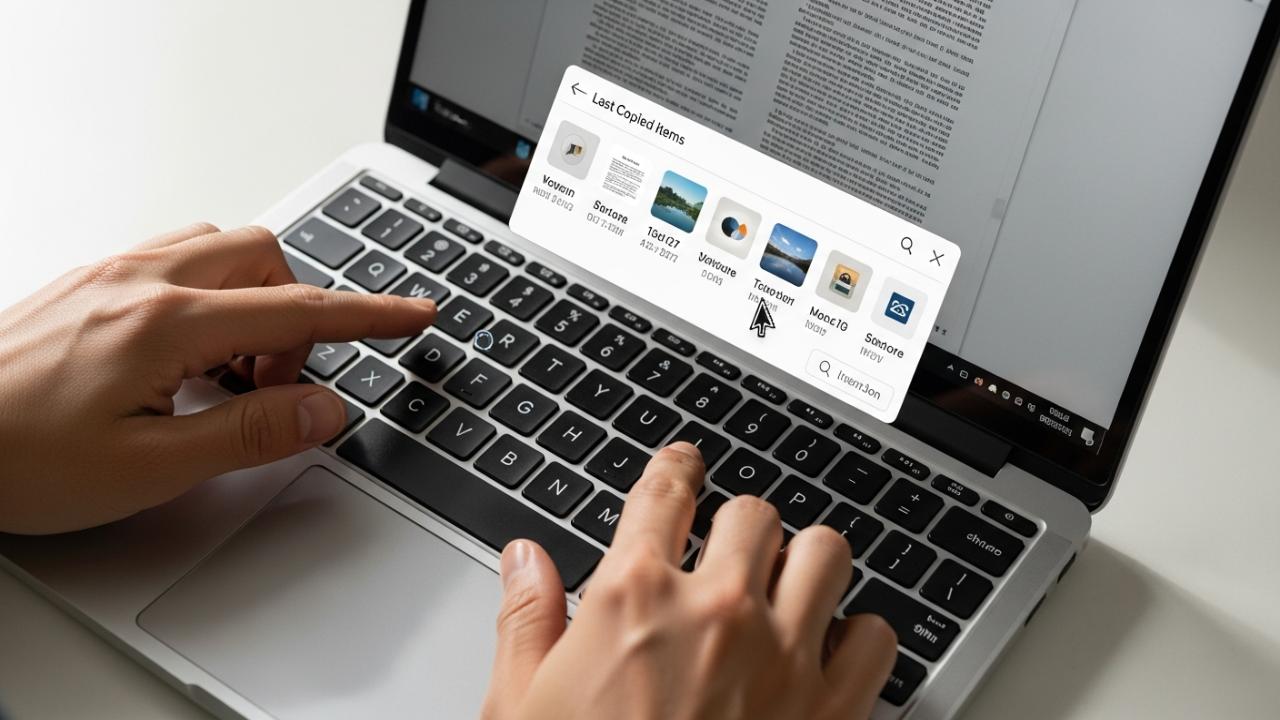
LAPTOP • DAILYTECH.ID - To check clipboard history on a Chromebook, press the Search key (magnifying glass) + V. This shortcut opens a small window displaying your last five copied items, including text and images. Simply click on an item to paste it, or use the “Clear all” option to empty the history. This guide will elaborate on accessing and effectively utilizing this essential Chromebook feature.
Checking your clipboard history on a Chromebook allows you to quickly retrieve previous copied text or images, enhancing productivity and preventing the loss of important information. This feature is integrated into Chrome OS, providing a convenient way to manage multiple copied items without repeatedly copying new content.
How to Access and Manage Your Chromebook’s Clipboard History
Accessing your copy and paste history on a Chromebook is straightforward, primarily relying on a simple keyboard shortcut that reveals all your recent copied content. Understanding how to view, select, and clear these items is crucial for an efficient workflow, helping you manage the flow of information like a river finds its path. This understanding transforms your device from a mere tool into a dependable companion, ready to serve your needs with quiet efficiency. To truly harness the power of your Chromebook, knowing how to see your clipboard history on Chromebook is a fundamental skill that will save you time and effort in your daily tasks, whether you are a student gathering research, a professional compiling reports, or simply organizing your thoughts.
The Quick Shortcut: Search + V
The most direct and universally recognized way to view clipboard history on a Chromebook is by simultaneously pressing the Search key and the V key. The Search key, often marked with a magnifying glass icon or sometimes a launcher icon, resides on the left side of your keyboard, usually where the Caps Lock key would be on a traditional layout. When these two keys are pressed together, a small, unobtrusive floating window will gracefully appear near your cursor’s current position on the screen. This immediate action displays the last five items you’ve copied, encompassing both text and images, allowing you to quickly check clipboard history Chromebook content. It’s a swift gesture, like gathering scattered seeds, bringing all your recently copied treasures into a single, accessible view. This simple yet powerful action is your gateway to managing multiple pieces of information, ensuring that nothing you’ve deemed important enough to copy is lost to the ether of memory. Mastering this shortcut means you always know how to check clipboard history on Chromebook, making your work smoother and more intuitive.
The convenience of this shortcut cannot be overstated. Imagine working on a complex document, needing to pull various pieces of information – a name, an address, a paragraph, an image – from different sources. Instead of the laborious cycle of copying one item, pasting it, then going back to copy the next, this feature allows you to gather multiple pieces consecutively. Then, with a simple Search + V, you bring forth your collection, ready to be deployed. This method of how to see clipboard history on a Chromebook empowers you to organize your thoughts and data with remarkable fluidity, much like a skilled weaver bringing together disparate threads to form a cohesive pattern. It makes the task of how to check copy and paste history on Chromebook not a chore, but an intuitive part of your creative or analytical process.
Pasting from History
Once the clipboard history window appears, a world of previously copied content unfurls before you. From this concise list, you can easily paste any of the stored items with precision and ease. To paste, simply move your cursor over the desired text or image within the history list and click on it. The selected item will instantly manifest at your cursor’s current location, just as a thought finds its way into expression. This seamless function allows you to access copy and paste history Chromebook efficiently, selecting exactly what you need without having to re-copy previous selections. It’s an invaluable feature that saves precious moments and reduces the mental load of remembering which item was last copied.
This precise control over what you paste from your clipboard history on a Chromebook offers a significant advantage in various scenarios. Perhaps you need to reuse a specific URL multiple times throughout an email, or maybe you’ve copied several snippets of research to be inserted into different sections of a report. Rather than navigating back and forth to your source material, trying to remember what you last copied, you simply bring up your history. Each click retrieves precisely what you intend, making the process of how to view clipboard history on Chromebook an active, decision-making step rather than a passive recall. This capability transforms the act of pasting from a reactive action to a proactive choice, fostering a more deliberate and productive interaction with your device. It means you can see all clipboard history Chromebook holds and pick the exact piece of information you need without fuss.
Clearing Your Clipboard History
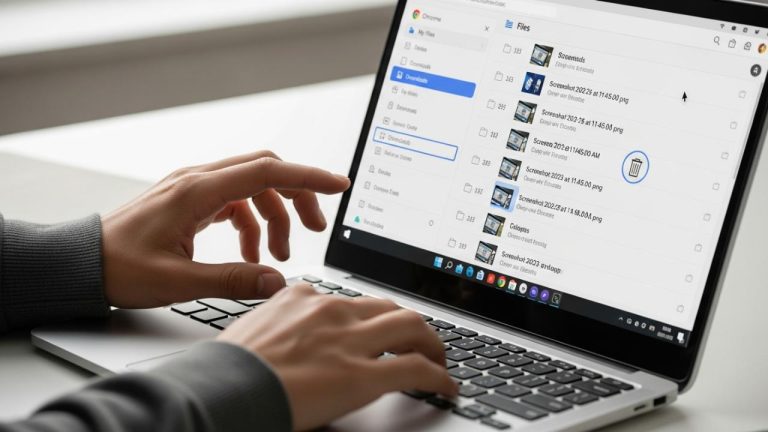
To maintain privacy, to keep your digital space tidy, or simply to declutter your workflow, knowing how to clear your clipboard history on Chromebook is as important as knowing how to populate it. Within the small, yet powerful, clipboard history window – the one you summoned with the familiar Search + V shortcut – you will typically find an option labeled “Clear all,” or perhaps a clear visual cue like a trash can icon. Clicking this option is a definitive action; it will, with a single gesture, remove all items from your current history. This comprehensive approach ensures that sensitive information doesn’t linger in your temporary memory, providing peace of mind and a clean slate for your next set of tasks.
It is important to understand that this clearing action is generally an “all-or-nothing” proposition. Unlike some more advanced clipboard managers found on other operating systems, Chrome OS typically does not offer the functionality to clear individual items from the history list. When you choose to clear, you are emptying the entire temporary reservoir. This design choice simplifies the interface and the user experience, ensuring that the feature remains quick and intuitive. However, it also means that you should be mindful of what you have stored if you only wish to remove one specific item. For most users, the ability to reset the clipboard completely is a practical and sufficient means to manage their how to check copy paste history Chromebook. This feature, like clearing old leaves to make way for new growth, helps keep your digital environment fresh and ready for new input.
Understanding the Chromebook Clipboard History Feature
The clipboard history on a Chromebook is more than just a simple holding place for the last item you copied; it is a robust utility, thoughtfully integrated into Chrome OS, designed to store and recall multiple pieces of information. Understanding its nuances – what it stores, how long it keeps items, and its inherent limitations – is akin to understanding the currents of a stream; it allows you to navigate and utilize it with greater foresight and mastery. This knowledge ensures that when you choose to use your Chromebook, you are doing so with full awareness of its capabilities, helping you to truly access copy and paste history Chromebook effectively.
What is Stored in Your Clipboard History?
Your Chromebook’s clipboard history acts as a short-term memory vault for both text and image data. Whenever you perform a copy action, be it a line of text from a web page, a lengthy URL, a numeric string, or even a screenshot captured as an image, that content is automatically and discreetly added to this history list. The system is designed to maintain a record of the last few items you’ve copied – typically five, though this number can sometimes see minor adjustments with system updates – ensuring that your most recent pieces of information are readily available. This allows you to effortlessly see all clipboard history Chromebook content, providing a quick mental snapshot of your recent digital acquisitions.
This comprehensive storage means that you are not confined to just the very last thing you copied. Imagine you are compiling research, copying quotes from various articles, alongside relevant graphs or diagrams. Instead of a frantic scramble to re-copy something you just overwrote, the clipboard history allows these distinct pieces of information to coexist temporarily, waiting for your command. This includes any type of content you might typically copy using the standard Ctrl + C shortcut, ensuring a broad and versatile utility. The clarity of what is stored and how to check copy history on Chromebook empowers you to work with confidence, knowing your digital treasures are temporarily safeguarded and easily retrievable, much like a well-tended garden yields its fruits when needed. This feature is a core component of clipboard history on a Chromebook, simplifying complex tasks.
Limitations of Chromebook Clipboard History
While the clipboard history on a Chromebook is an incredibly useful and productivity-boosting feature, it is important to acknowledge and understand its inherent limitations. These aren’t shortcomings, but rather design choices that define its purpose and scope. Firstly, this feature is not intended as a permanent storage solution. The items held within your clipboard history are temporary; they are typically lost upon a full shutdown or a restart of your Chromebook device. Think of it as a clear pool that refills with each new day, washing away the old. Therefore, any critical information you copy should be pasted into a more permanent document or application before powering down your machine. This awareness is key when considering how to check clipboard history in Chromebook.
Secondly, the number of items stored is finite. As mentioned, the system generally keeps the last five copied items. This means that as new content is copied, older items are automatically and silently removed from the history list to make space. It’s a continuous cycle, ensuring the list remains fresh and relevant to your most recent activities. If you copy a sixth item, the very first item you copied will disappear from the list. This limitation encourages users to paste important information promptly rather than relying on the clipboard history as a long-term archive. Lastly, and significantly for those who work across multiple devices, the clipboard history on a Chromebook is specific to that particular device. It does not sync with other Chromebooks you might own, nor does it synchronize with your Google account across different platforms. Each Chromebook maintains its own, isolated clipboard history. Understanding these boundaries of clipboard history Chrome OS allows for more strategic and effective use of this feature, preventing potential frustration and ensuring a smoother digital journey. When you ask where do I find my clipboard on my Chromebook, it is always right there on that specific machine.
Tips for Efficient Clipboard Use on Chrome OS
Mastering your clipboard history on Chrome OS can significantly boost your productivity, turning what might seem like a simple function into a powerful tool for managing information. Much like an experienced artisan knows how to get the most from their tools, understanding these advanced tips for how to check clipboard history Chromebook will allow you to work smarter, not harder. These insights will help you to not just view clipboard history Chromebook, but to truly leverage it as an integral part of your daily digital rhythm.
Pinning Frequently Used Items
For those pieces of information that you find yourself using time and again – perhaps a boilerplate phrase, a specific email address, a common URL, or a frequently used image – the Chromebook clipboard history offers a truly invaluable feature: the ability to “pin” them. Pinning an item transforms it from a temporary entry into a semi-permanent resident of your clipboard history. To do this, simply open the clipboard history window using your trusty Search + V shortcut. Once the list appears, hover your cursor over the item you wish to keep readily accessible. A small pin icon will appear, typically in the corner of that item’s entry. Clicking this pin icon will secure the item.
Pinned items possess a unique resilience. They will remain in your history list even as newer items are added and older, unpinned items are automatically cycled out. Furthermore, they persist even if you manually choose to “Clear all” your unpinned history, providing a layer of permanence without requiring you to copy them repeatedly. This ensures they are always available at a moment’s notice, eliminating the need to search for or re-type common phrases. This thoughtful feature helps you to access copy paste history Chromebook with unprecedented ease, turning your clipboard into a personalized quick-reference guide. It’s like having a dedicated pouch for your most essential tools, always within reach when you need to how to check copy history Chromebook.
Using the Clipboard with Specific Apps
One of the great strengths of the clipboard history on Chrome OS lies in its universal applicability across the ecosystem. This robust feature functions consistently and reliably across virtually all applications you might use on your Chromebook, ensuring a seamless and predictable user experience. Whether you find yourself deeply engrossed in drafting a lengthy report in Google Docs, meticulously gathering information from multiple tabs within your web browser, or jotting down quick notes in a local text editor, the fundamental method for how to view clipboard history Chromebook remains unchanged. The familiar Search + V shortcut serves as the universal key, unlocking your copied content regardless of the active application.
This seamless integration means that you don’t need to learn different methods or shortcuts for various programs. The expectation that your copied content will be available through the same simple gesture, wherever you are working on your Chromebook, builds a strong sense of reliability and trust in the system. This consistency significantly contributes to your overall productivity, allowing you to transition smoothly between tasks and applications without breaking your flow. It truly means that understanding how to see your clipboard history Chromebook is a skill that translates across your entire digital environment, empowering you with a consistently efficient way to manage information flow, much like a well-established trail guides you through diverse landscapes without losing its way. The google clipboard history chromebook is designed to be a constant companion, no matter the app.
Troubleshooting Common Clipboard Issues
Even the most dependable tools can sometimes present a challenge. Encountering issues with your Chromebook’s clipboard history can be frustrating, especially when you need to quickly retrieve information. However, many common problems can be resolved with straightforward troubleshooting steps, much like finding the right stone to balance a cairn. Knowing how to diagnose and fix these minor hitches will keep your workflow smooth and ensure you can always how to check copy and paste history on Chromebook effectively.
Clipboard Not Appearing
If you find yourself pressing the Search + V shortcut and the much-anticipated clipboard history window fails to appear, it can certainly be perplexing. First and foremost, calmly and deliberately ensure that you are indeed pressing both keys simultaneously and with sufficient, yet gentle, pressure. Sometimes, a slight misalignment in timing or an insufficient press can prevent the command from registering correctly. Take a moment to check if your physical keyboard is functioning correctly; are other key combinations working as expected? A simple test, such as typing in a document, can confirm basic keyboard functionality.
Should the issue persist after verifying your key presses, a fundamental troubleshooting step that often resolves many temporary software glitches is a simple restart of your Chromebook. Just as a forest revitalizes after a cleansing rain, a fresh boot can clear out any minor system snags that might be affecting core features like the clipboard. Power down your Chromebook completely, wait a few moments, and then power it back on. Once your device has fully restarted, attempt the Search + V shortcut again to see if the clipboard history now makes its appearance. This is often the quickest path to restoring full functionality and allowing you to check clipboard Chromebook. If the problem persists, it may be worth checking for any pending Chrome OS updates, as an outdated system could sometimes lead to minor inconsistencies in feature performance, impacting your ability to see your clipboard history Chromebook.
Items Not Pasting Correctly
There are times when you successfully bring up your clipboard history, select an item, but it either fails to paste, pastes incorrectly, or pastes in an unexpected format. This can be a source of immediate frustration when you’re trying to how to check clipboard history in Chromebook. The first crucial step is to verify that your cursor is actively placed and blinking within the desired input field or document where you intend to paste the content. If the cursor is not in an editable area, or if the application itself is not the active window, the paste command may not execute or may default to an unintended location.
Furthermore, consider the nature of the item you are trying to paste. Very large images or exceptionally long strings of text might take a moment longer to process and appear, especially if your Chromebook is under heavy load. Give it a few extra seconds before assuming failure. If problems continue, a targeted approach is often best. Try restarting the specific application you are working in. Close it completely and then reopen it. If the issue still isn’t resolved, just like when addressing the previous issue, a full restart of your Chromebook can often clear up deeper system conflicts that might be affecting copy-paste functionality across all applications. Ensuring you are selecting the correct item from your how to see your clipboard history on Chromebook list is also paramount. Sometimes, users inadvertently click a different item in their haste. Carefully re-select the intended content to ensure accurate pasting.
FAQs – How to Check Clipboard History Chromebook
The Chromebook clipboard history typically stores the last five items you have copied. As new items are copied, older ones are automatically removed from the history to make space.
Yes, you can pin frequently used items to your Chromebook clipboard history. Pinned items will remain in the list even after new items are copied or the history is cleared, ensuring easy access.
No, the Chromebook clipboard history is specific to the device you are currently using. It does not sync across multiple Chromebooks or with your Google account on other devices.
Currently, Chrome OS does not allow you to clear individual items from the clipboard history. You can only clear the entire history at once by selecting the “Clear all” option within the clipboard window.
Copy/paste are the actions you perform to move data. The clipboard is the temporary storage area where that data resides after you “copy” it, waiting to be “pasted.” Clipboard history is the feature that remembers multiple items.